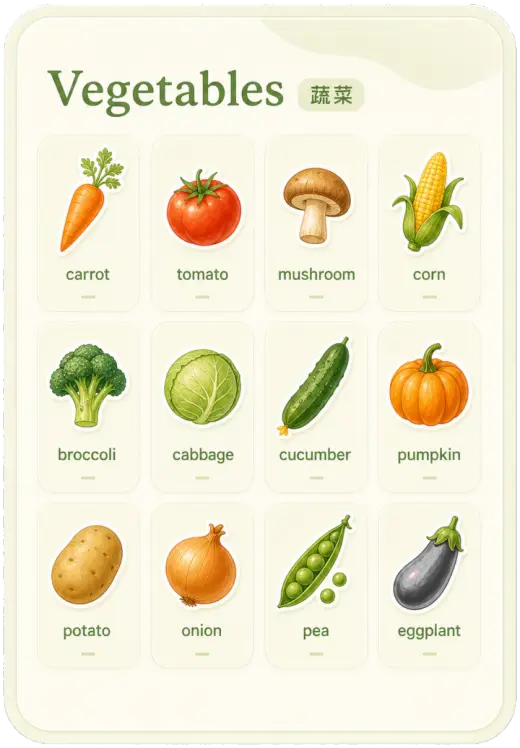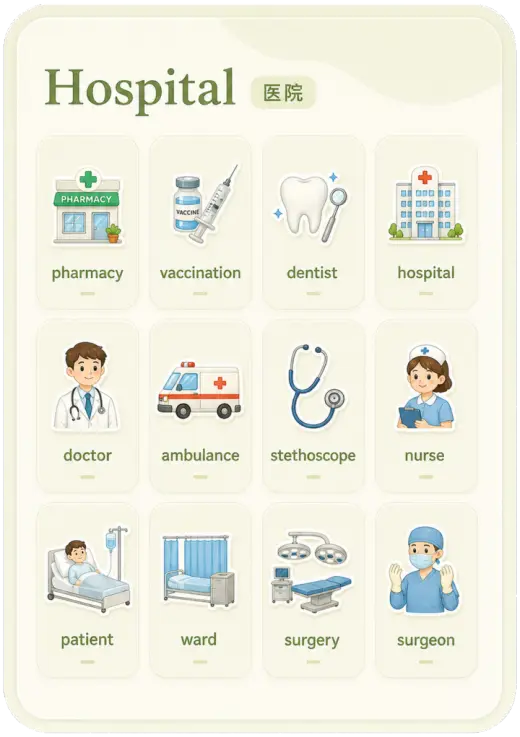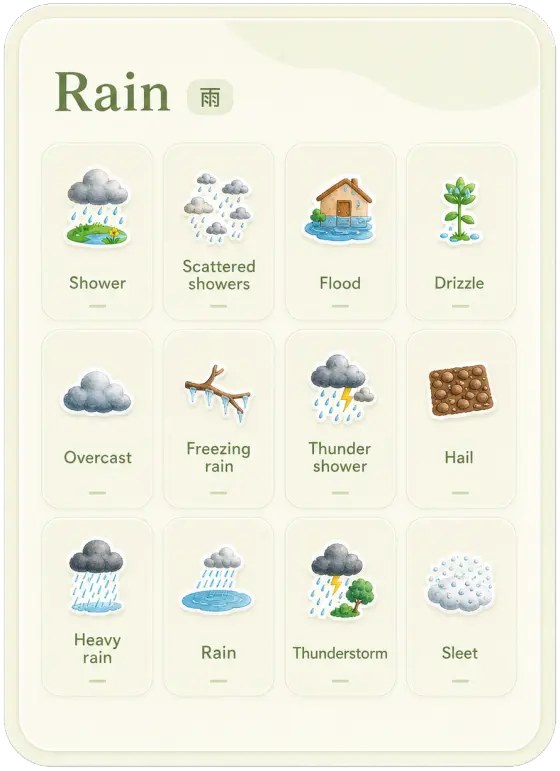
Theme cards
Gather related words into one visual scene before you study the details.
Learn languages by topic with images, stories, audio, and practice. Theme cards gather vocabulary into scenes before you study each word in detail.
Start from a visual theme card, then connect sound, meaning, examples, reading, and recall practice.
Gather related words into one visual scene before you study the details.
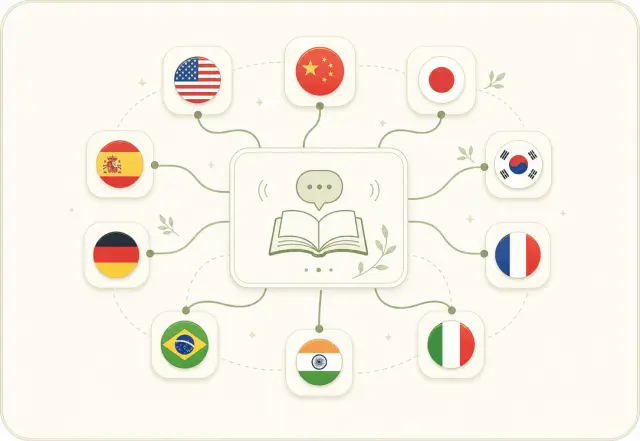
Start with the language you know, then move into English, Chinese, Japanese, and more learning paths.
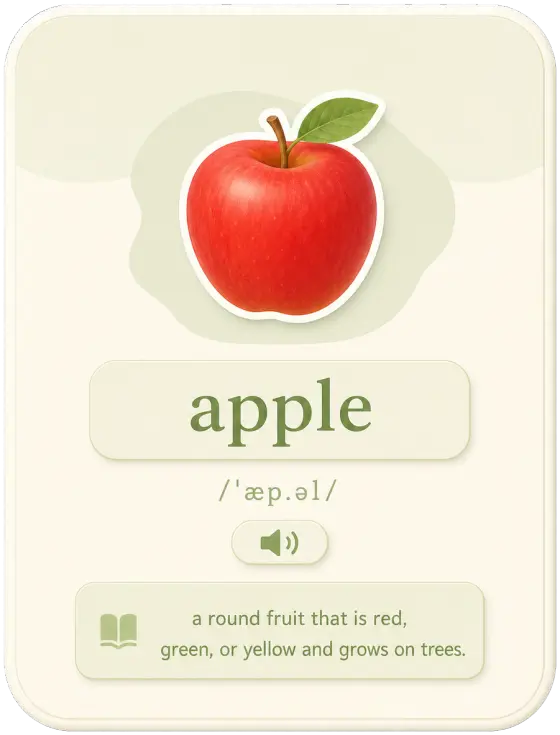
Open a word to see pronunciation, meaning, and examples in one place.
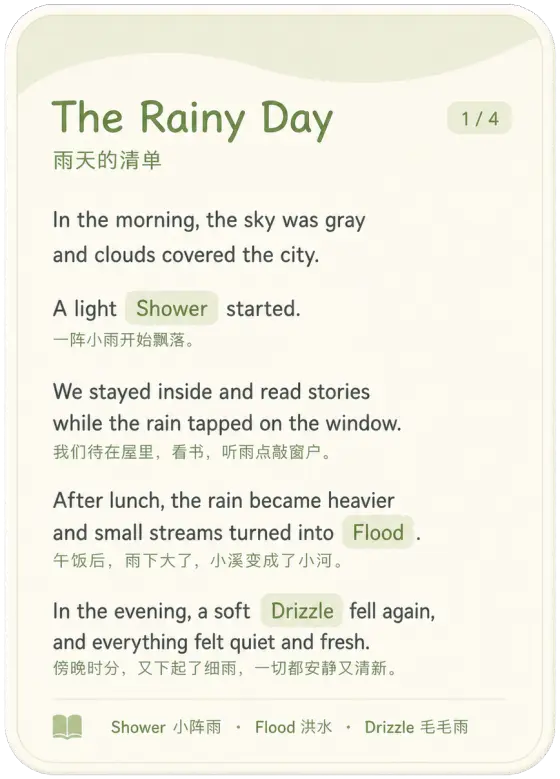
Read a compact passage where the same theme words appear naturally.
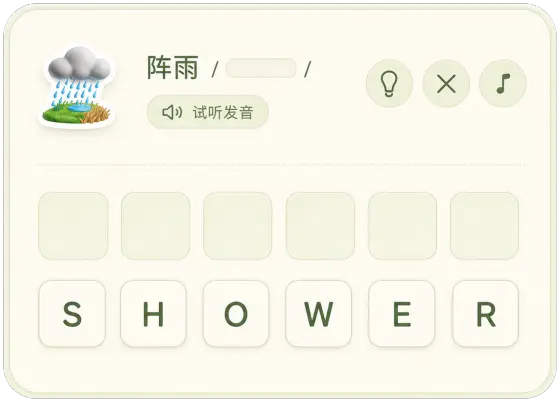
Use image and sound cues to rebuild words after you recognize them.
Supported languages
Choose your native language first, then choose a target language. Each learning path uses visual themes, pronunciation, examples, short readings, and practice.
Seeing a full theme first makes new words feel connected instead of isolated.
 MiaDaily review
The short readings help me notice how the words fit into a real scene.
 LeoFamily learning
One card is short enough for a break, but still has image, sound, and context.
 QingTravel vocabulary
Use familiar scenes to connect images, pronunciation, spelling, and short readings across the supported language pair you choose.