Theme guide
Play
Images are examples only. Download the app to study the full theme with English as your guide.
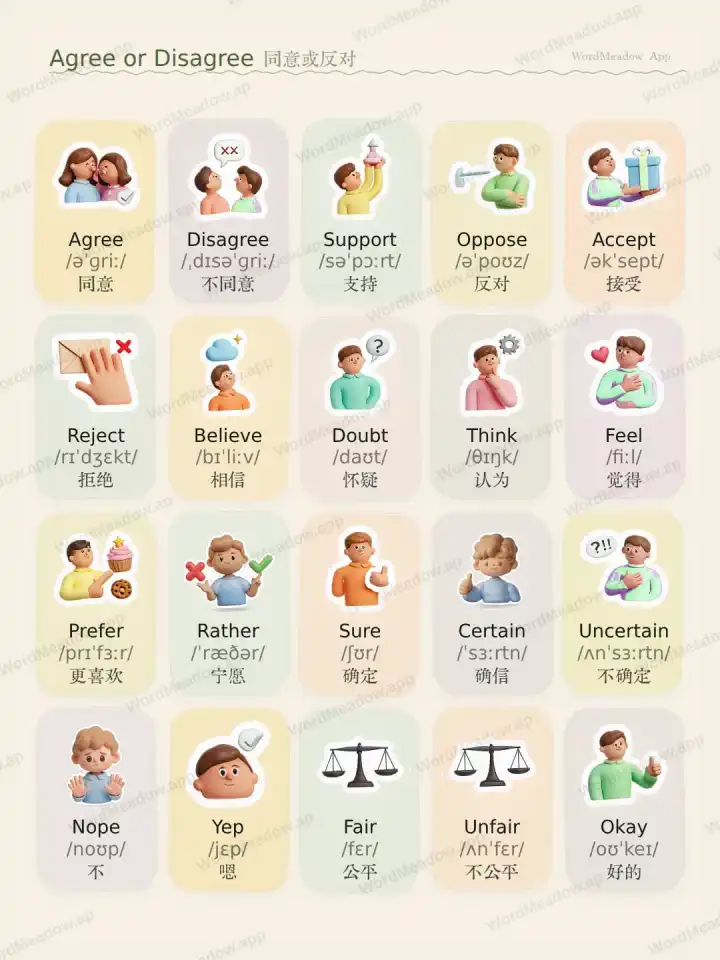
Theme video
同意或反对 video
Watch this theme card with English guidance and Simplified Chinese vocabulary.Vocabulary list
Browse words, pronunciation, translations, and example sentences.同意
Agree
我同意你关于早点开始的观点。I agree with your point about starting earlier.
不同意
Disagree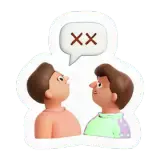
我不同意,因为数据说明了不同的情况。I disagree because the numbers tell a different story.
支持
Support
很多人支持这条新规则,因为它看起来公平。Many people support the new rule because it feels fair.
反对
Oppose
几位居民反对建一个更大的停车场方案。Several residents oppose the plan for a larger parking lot.
接受
Accept
她接受了邀请,并且准时到达。She accepted the invitation and arrived on time.
拒绝
Reject
编辑因为文章太含糊而拒绝了它。The editor rejected the article for being too vague.
相信
Believe
我相信清晰的规则能让团队合作更容易。I believe that clear rules make teamwork easier.
怀疑
Doubt
我怀疑这趟火车会完全准点出发。I doubt that the train will leave exactly on time.
认为
Think
我认为博物馆星期一是关闭的。I think the museum is closed on Mondays.
觉得
Feel
我觉得这个提案需要更充分的理由。I feel this proposal needs a stronger reason.
更喜欢
Prefer
我更喜欢茶,因为晚饭后喝起来更清淡。I prefer tea because it tastes lighter after dinner.
宁愿
Rather
我宁愿等一等,也不想匆忙做决定。I would rather wait than make a rushed decision.
确定
Sure
你确定这个地址是对的吗?Are you sure this address is correct?
确信
Certain
我确信她选对了方向。I am certain that she chose the right path.
不确定
Uncertain
天气不确定,所以我们应该带把伞。The weather is uncertain, so we should bring an umbrella.
不
Nope
不,我没有多余的票。Nope, I don't have any extra tickets.
嗯
Yep
嗯,我今天下午会把文件发过去。Yep, I'll send the file this afternoon.
公平
Fair
给双方足够的时间发言是公平的。It's fair to give both sides enough time to speak.
不公平
Unfair
因为大家的错误却只惩罚一个人,这不公平。It feels unfair to punish one person for everyone's mistake.
好的
Okay
好的,等大家都准备好我们就开始。Okay, let's start when everyone is ready.
Get the WordMeadow app for the full study flow
More themes, tap-to-listen practice, saved words, short readings, and spelling exercises come together in the app.
More themesListen and repeatSaved reviewSpelling practice
 Open on the App Store
Android is coming
Use the iOS version for now. The Android download entry will appear here when it is ready.