Theme guide
Play
Images are examples only. Download the app to study the full theme with English as your guide.
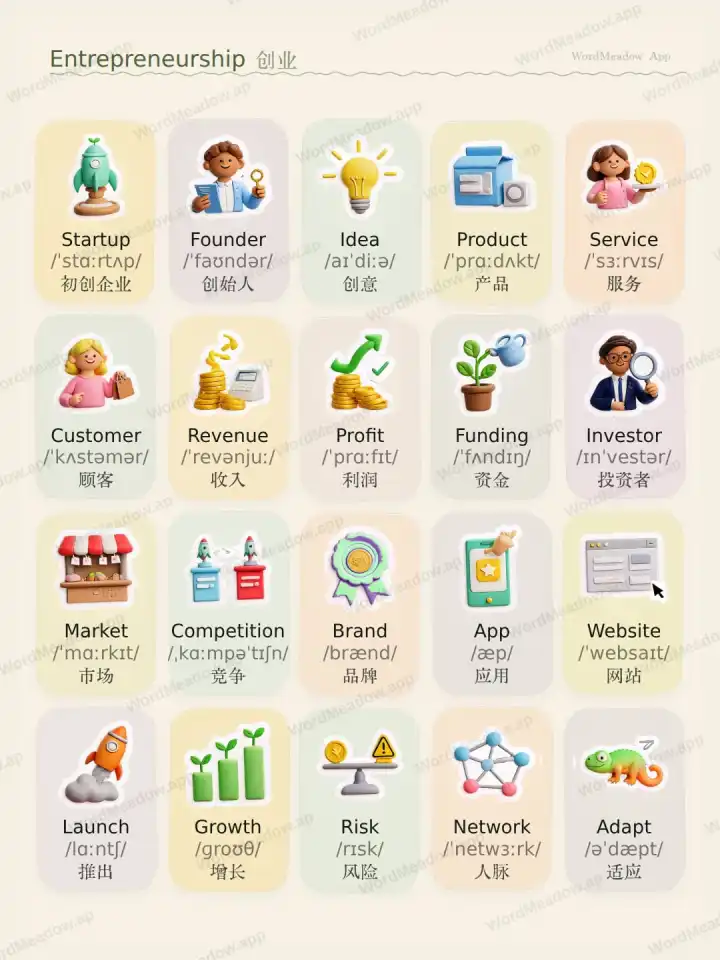
Theme video
创业 video
Watch this theme card with English guidance and Simplified Chinese vocabulary.Vocabulary list
Browse words, pronunciation, translations, and example sentences.初创企业
Startup
他们的初创企业从一个简单工具和清晰定位开始。Their startup began with a simple tool and a clear focus.
创始人
Founder
这位创始人花了很多年把一个粗糙的想法变成了真正的公司。The founder spent years turning a rough idea into a real company.
创意
Idea
她的创意解决了很多人每天都会遇到的一个小问题。Her idea solved a small problem that many people faced every day.
产品
Product
这个产品很好用,但团队还需要更好的包装。The product works well, but the team still needs better packaging.
服务
Service
好的服务能把第一次购买的人变成忠实顾客。Good service can turn a first-time buyer into a loyal customer.
顾客
Customer
这家公司认真倾听每一位顾客的反馈。The company listens carefully to every customer’s feedback.
收入
Revenue
更高的价格提高了收入,但成本也上升了。Higher prices increased revenue, but costs rose too.
利润
Profit
三年后,这家小企业终于开始盈利了。After three years, the small business finally made a profit.
资金
Funding
团队筹集了资金,用来招聘工程师并更快扩张。The team raised funding to hire engineers and expand faster.
投资者
Investor
一位投资者想看到这门生意能够稳定增长的证据。An investor wanted proof that the business could grow steadily.
市场
Market
他们在确定最终价格前先研究了市场。They studied the market before deciding on the final price.
竞争
Competition
激烈的竞争推动团队迅速改进了这款应用。Strong competition pushed the team to improve the app quickly.
品牌
Brand
清晰的品牌能让顾客更快记住这家公司。A clear brand helps customers remember the company faster.
应用
App
这个应用可以轻松实时记录支出。The app makes it easy to track expenses in real time.
网站
Website
这个网站用简单直接的方式介绍了这项服务。The website explains the service in a simple, direct way.
推出
Launch
公司计划下个月推出这款产品。The company plans to launch the product next month.
增长
Growth
稳定增长比一次性的暴涨更重要。Steady growth matters more than a one-time spike.
风险
Risk
每个新生意都伴随着一定风险。Every new business involves some risk.
人脉
Network
她通过定期参加行业活动建立了强大的人脉网络。She built a strong network by attending industry events regularly.
适应
Adapt
当顾客需求变化时,团队必须迅速适应。The team had to adapt quickly when customer needs changed.
Get the WordMeadow app for the full study flow
More themes, tap-to-listen practice, saved words, short readings, and spelling exercises come together in the app.
More themesListen and repeatSaved reviewSpelling practice
 Open on the App Store
Android is coming
Use the iOS version for now. The Android download entry will appear here when it is ready.