Theme guide
Play
Images are examples only. Download the app to study the full theme with English as your guide.
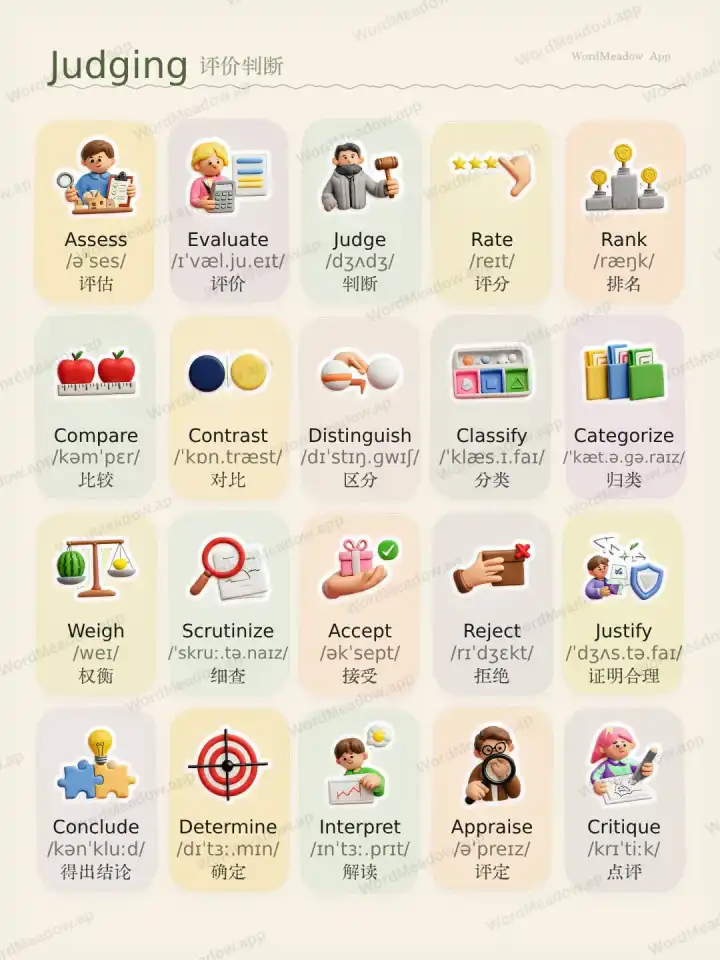
Theme video
评价判断 video
Watch this theme card with English guidance and Simplified Chinese vocabulary.Vocabulary list
Browse words, pronunciation, translations, and example sentences.评估
Assess
老师在期末考试前评估了每个学生的进步。The teacher assessed each student's progress before the final exam.
评价
Evaluate
我们需要在启动前评估这个方案。We need to evaluate the plan before we launch it.
判断
Judge
不要以貌取人。You should not judge a book by its cover.
评分
Rate
请把这项服务评一到五颗星。Please rate the service from one to five stars.
排名
Rank
这个队在比赛中排名第一。The team ranked first in the competition.
比较
Compare
比较这两份报告,找出不同之处。Compare these two reports and find the differences.
对比
Contrast
这份报告对比了城市生活和乡村生活。The report contrasts city life with village life.
区分
Distinguish
很难把真品和仿品区分开来。It is hard to distinguish the genuine article from the fake one.
分类
Classify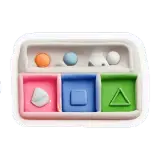
科学家按栖息地给这些动物分类。Scientists classify these animals by habitat.
归类
Categorize
图书管理员按学科给这些书归类。The librarian categorized the books by subject.
权衡
Weigh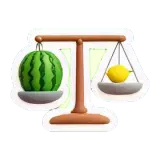
在决定之前,要仔细权衡风险和收益。Before deciding, weigh the risks and benefits carefully.
细查
Scrutinize
这些文件被法律团队仔细审查。The documents were scrutinized by the legal team.
接受
Accept
她接受了在会议上发言的邀请。She accepted the invitation to speak at the conference.
拒绝
Reject
编辑拒绝了这篇文章,因为它缺乏证据。The editor rejected the article because it lacked evidence.
证明合理
Justify
经理试图用明确的数据证明这次延误是合理的。The manager tried to justify the delay with clear data.
得出结论
Conclude
在审查结果后,我们得出结论:这次测试不可靠。After reviewing the results, we concluded that the test was unreliable.
确定
Determine
证据将确定最终结果。The evidence will determine the final outcome.
解读
Interpret
这份指南帮助我们正确解读这张图表。The guide helped us interpret the chart correctly.
评定
Appraise
拍卖前,专家对这幅画进行了估价。An expert appraised the painting before the auction.
点评
Critique
教授批评了这个论证,因为它逻辑薄弱。The professor critiqued the argument for its weak logic.
Get the WordMeadow app for the full study flow
More themes, tap-to-listen practice, saved words, short readings, and spelling exercises come together in the app.
More themesListen and repeatSaved reviewSpelling practice
 Open on the App Store
Android is coming
Use the iOS version for now. The Android download entry will appear here when it is ready.